


Biodegradable vs Compostable Sponges: What to Look For
Biodegradable vs Compostable Sponges: What to Look For
“Biodegradable” sounds green—but it can mean a product breaks down someday… somewhere. For a real low-waste clean, choose plastic-free sponges designed to be home-compostable once you’re finished with them, such as cellulose paired with natural loofah. And make sure they actually clean brilliantly, too.
As a small family-run business, we try to be genuinely thoughtful about resources — what our products are made from, where materials come from, and what happens to them after use.
Key differences (in plain English)
- Biodegradable: May break down eventually, often without a clear timescale or conditions. Can still contain plastics.
- Compostable: Designed to break down into nutrient-rich compost under specific conditions. Look for home-compostable claims.
- Home-compostable vs industrial: Industrial compostable needs commercial facilities; home-compostable is designed for a well-managed home compost heap.
Buyer’s checklist before you add to basket
- Materials: Cellulose + loofah; avoid polyurethane/polyester nets or pads.
- After use: A clear home-compostable statement (not just “biodegradable”).
- Performance: Non-scratch scrub + great absorbency.
- Care: Washable (machine or boil wash) to extend life.
- Transparency: Clear materials and disposal guidance.
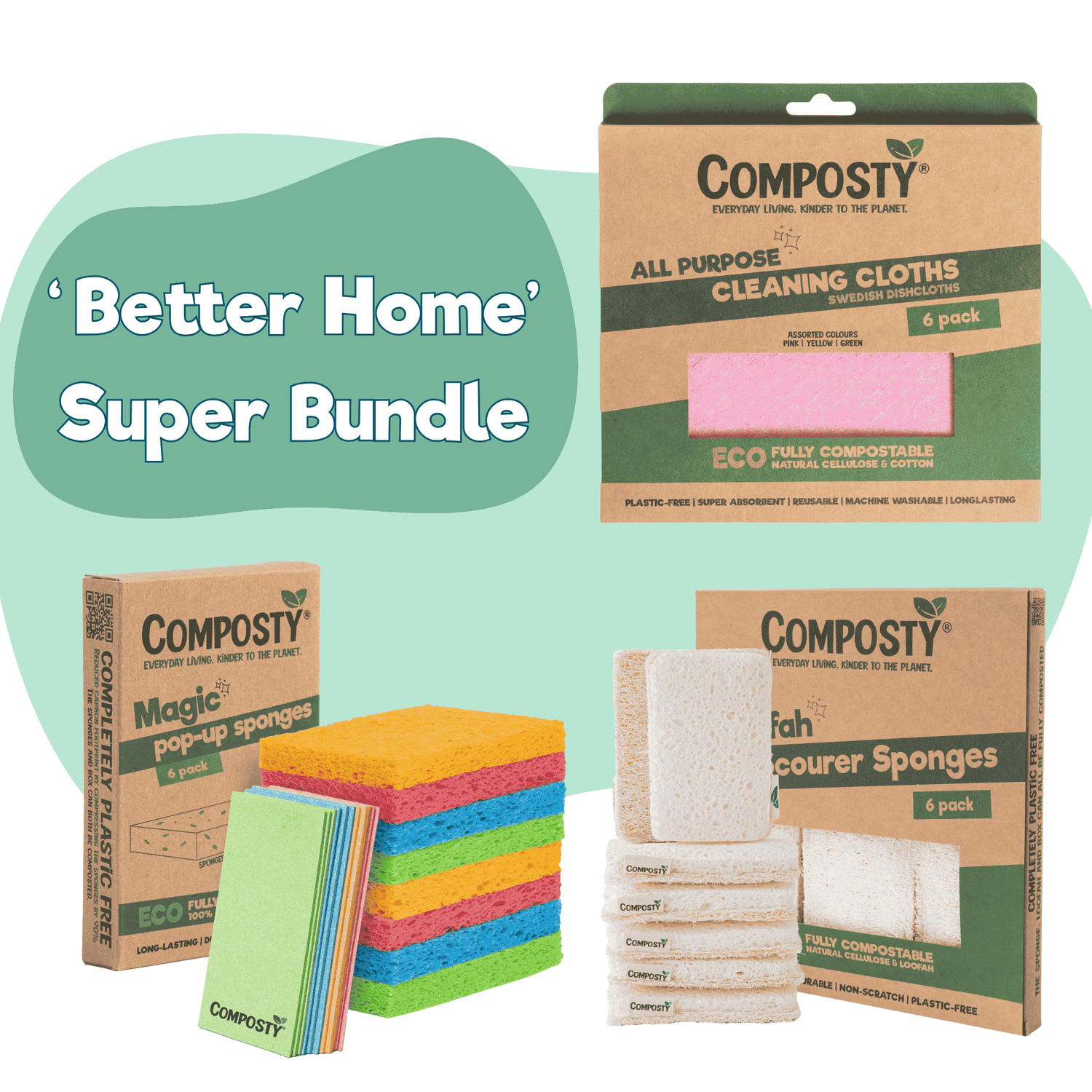
Composty’s Home & Kitchen range ticks every box—plastic-free materials, effective non-scratch clean, and clear after-use guidance. That’s why we call it The Better Sponge.
How to dispose of a truly compostable sponge
- Rinse and squeeze to remove food oil or residue.
- Cut into 2–3 cm strips to speed up breakdown.
- Mix with browns and greens in your compost.
FAQ
How can I tell if a “biodegradable” sponge still contains plastic?
Check the materials list. Polyurethane, polyester or plastic mesh means it’s not home-compostable.
What does “home-compostable” look like in practice?
Cut it up, keep compost moist like a wrung-out sponge, and turn occasionally. Breakdown varies by conditions.
Do compostable sponges clean as well as plastic ones?
Yes — cellulose is highly absorbent and loofah provides effective non-scratch scrubbing, without microplastics.