



The Hidden Waste Problem in Airbnb & Holiday Lets — And How to Fix It
Most Airbnb and holiday let waste is not dramatic. It does not usually come from one big decision or one obvious mistake.
It builds up quietly through every turnover: bin liners, packaging, old food, half-used products, tired cloths, cleaning supplies, welcome pack waste, bathroom consumables and kitchen items that are replaced again and again.
For a single host, this may feel small. For property managers, serviced accommodation operators and busy holiday-let owners, repeated changeover waste can become a real operational cost.
This guide explains where hidden waste appears in Airbnb and holiday let operations, why it matters commercially, and how to reduce it without making the guest experience feel cheaper, harder or less comfortable.
Why waste is different in short-term rentals
Short-term rentals create waste differently from normal homes.
In a normal home, people use products gradually. In a holiday let, the property is reset repeatedly for new guests. That reset process creates a cycle of replacement, disposal and restocking.
Every stay may involve:
- Changing linens and towels.
- Emptying bins.
- Replacing guest consumables.
- Removing leftover food.
- Restocking kitchen and bathroom basics.
- Cleaning the property with disposable or packaged products.
- Replacing items that look used, tired or unclear.
Airbnb’s host ground rules require listings to be clean before check-in, and guest turnover includes cleaning between every stay. You can read Airbnb’s host ground rules here: Airbnb ground rules for home hosts.
The point is not to avoid changeovers. The point is to make each changeover less wasteful and easier to manage.
The main sources of hidden Airbnb waste
Most hosts think about visible guest rubbish: takeaway boxes, bottles, food packaging and bathroom waste.
But the bigger operational issue is usually repeated hidden waste.
1. Kitchen consumables
The kitchen is one of the most waste-heavy areas in an Airbnb because it is used every stay and reset every turnover.
Common sources include:
- Sponges and washing-up items.
- Dish cloths and tea towels.
- Washing-up liquid bottles.
- Dishwasher tablet wrappers.
- Kitchen roll.
- Bin liners.
- Food waste bags.
- Tea, coffee and sugar packaging.
These are not glamorous items, but they are used constantly. That makes them important.
2. Bathroom consumables
Bathroom waste often comes from products that are half-used, over-supplied or poorly controlled.
- Mini toiletries.
- Part-used soaps.
- Plastic bottles.
- Toilet roll packaging.
- Disposable wipes.
- Sanitary waste.
- Cleaning product packaging.
Many hosts want bathrooms to feel generous, but over-supplying disposable products can create unnecessary waste and restocking complexity.
3. Welcome pack packaging
Welcome packs are useful, but they can become packaging-heavy very quickly.
Common examples include:
- Individually wrapped biscuits.
- Mini jam jars.
- Plastic sachets.
- Single-serve milk portions.
- Excess leaflets and printed materials.
- Plastic presentation bags.
A good welcome pack should feel thoughtful, not wasteful. For more ideas, read: Sustainable Welcome Pack Ideas for Airbnb and Holiday Lets.
4. Food waste
Food waste is difficult because guests are unpredictable. Some bring groceries and cook every day. Others leave unopened or half-used food behind.
Hosts and cleaners often remove leftover food quickly for hygiene and presentation reasons, which is understandable. But without a clear system, food waste can simply go into general rubbish.
WRAP works with hospitality and food service organisations on targeted waste reduction and the UK Food Waste Reduction Roadmap. You can read more here: WRAP hospitality and food service.
5. Cleaning product waste
Cleaning operations can create significant packaging waste, especially when properties are restocked quickly or cleaners buy supplies independently.
Waste often comes from:
- Multiple half-used sprays.
- Small plastic bottles.
- Disposable wipes.
- Single-use cloths.
- Duplicate products across properties.
- Emergency supermarket purchases.
When stock control is weak, waste increases and costs rise.
6. Laundry and textile waste
Laundry is necessary, but textile management can create hidden waste if towels, sheets and cloths are replaced too quickly or damaged through poor processes.
Common issues include:
- Over-washing lightly used items.
- Using the wrong products for stain treatment.
- Replacing towels because of small stains.
- Losing stock between properties.
- Keeping too much mismatched linen.
Better stock rotation and stain treatment can reduce unnecessary replacement.
Why hidden waste matters commercially
Reducing waste is not just an environmental decision. It is an operational decision.
It affects cost
Small consumables are easy to ignore because each item is low cost. But repeated across every stay, every property and every month, they add up.
Waste often hides inside:
- Last-minute restocking.
- Over-ordering.
- Duplicate products.
- Bulky storage.
- Cleaner time spent searching for supplies.
- Throwing away items that are unclear, tired or badly presented.
It affects guest perception
Guests may not know your waste system, but they notice the signals.
They notice whether:
- The kitchen sink area feels fresh.
- Bathroom products look intentional.
- Bins and recycling are easy to understand.
- Welcome items feel thoughtful rather than excessive.
- The property feels organised and cared for.
Lower-waste does not mean lower quality. Done properly, it can make a property feel more premium.
It affects turnover speed
Waste and clutter slow changeovers down.
If cleaners need to sort random products, remove old packaging, check half-used items or search through overfilled cupboards, the turnover takes longer.
For a faster operational system, read: Holiday Let Turnover Guide: How Professional Hosts Reset Faster.
How to reduce Airbnb and holiday let waste
The strongest waste reduction strategy is not one dramatic swap. It is a system.
1. Audit one full turnover
Start by tracking what leaves the property during one normal changeover.
Record:
- What gets thrown away.
- What gets replaced.
- What guests leave behind.
- What cleaners use.
- What packaging is generated.
- What stock is hard to store or count.
This gives you a practical waste map. Without this, hosts often guess incorrectly.
2. Separate guest waste from operational waste
Guest waste and operational waste need different fixes.
Guest waste is influenced by communication, bins, recycling and food waste systems.
Operational waste is influenced by purchasing, stock control, product choice and turnover process.
Do not treat them as the same problem.
3. Standardise repeat consumables
The fastest improvement for property managers is standardisation.
Use the same core consumables across properties where possible:
- Same washing-up setup.
- Same hand soap system.
- Same bin liner sizes.
- Same dishwasher tablets.
- Same guest kitchen basics.
- Same restocking quantities.
Standardisation makes stock easier to order, store, count and replace.
4. Use refillables where they genuinely make sense
Refillables can reduce packaging waste, but only if they are managed properly.
Good refillable options include:
- Washing-up liquid.
- Hand soap.
- Shampoo and body wash in fixed dispensers.
- Cleaning products used by housekeeping teams.
Avoid refill systems that look messy, unlabelled or unhygienic. Guest trust matters.
5. Make recycling obvious
Guests are more likely to recycle correctly when it is easy.
Provide:
- Clearly labelled bins.
- Simple instructions near the bins.
- Local guidance where rules are unusual.
- A food waste caddy where appropriate.
- A short note, not a long lecture.
For workplace recycling in England, government guidance recommends checking where food waste is present and adding food waste bins in those locations. You can read the guidance here: Simpler recycling: workplace recycling in England.
6. Reduce welcome pack packaging
A welcome pack should create a positive moment, not a bin full of wrappers.
Better options include:
- Local products with minimal packaging.
- Reusable presentation trays or baskets.
- Glass jars where practical.
- Tea and coffee in simple containers.
- One strong local treat instead of five small packaged items.
- Digital guest guides instead of excessive printed materials.
The goal is a better arrival experience with less throwaway material.
7. Improve kitchen reset items
The kitchen is one of the best places to reduce repeated waste because the same items are replaced constantly.
Focus on:
- Guest-ready washing-up items.
- Refillable washing-up liquid.
- Reusable housekeeping cloths.
- Clear bin and recycling systems.
- Products that store compactly between turnovers.
Lower-waste kitchen reset
Small repeat items create hidden waste
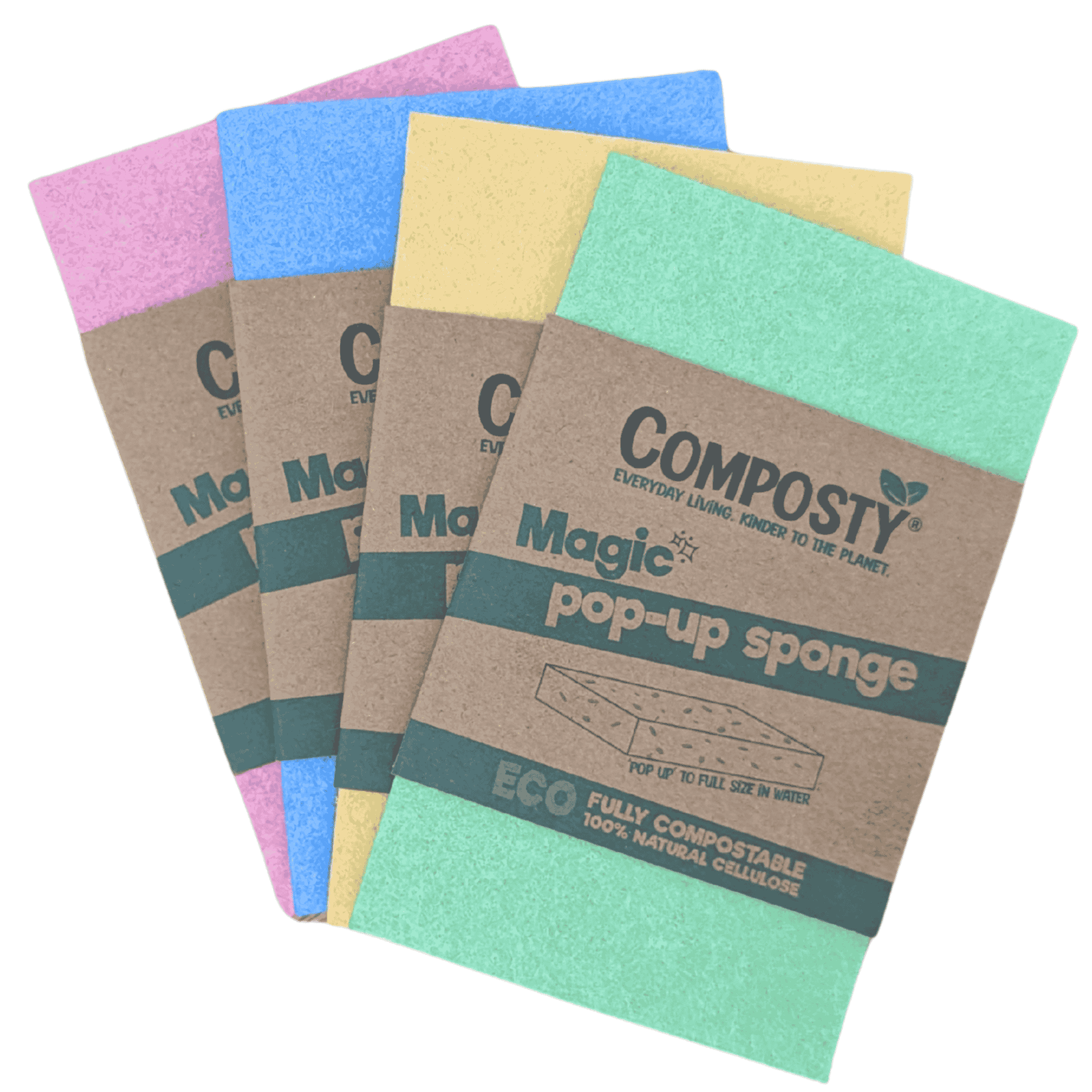
Sponges are one of those small items that can be replaced again and again across Airbnb and holiday let turnovers.
Composty pop-up sponges are individually sleeved, plastic-free and compostable after use. They arrive flat, pop up to full size in water, and help hosts present a fresh washing-up item clearly at every stay.
Less cupboard bulk. Better guest presentation. Lower-waste changeovers.
8. Keep stock compact and countable
Storage is a hidden operational issue in holiday lets.
Bulky stock creates:
- Messy cupboards.
- Harder stock checks.
- More duplicate purchasing.
- More cleaner confusion.
- More wasted space in small properties.
Choose supplies that are easy to store, stack and count.
9. Avoid vague green claims
Hosts should be careful with broad claims such as “eco-friendly”, “green” or “zero waste”. These can sound good, but they need to be accurate and supported.
The UK Green Claims Code says environmental claims should be accurate, clear and backed by up-to-date, credible evidence. You can read the checklist here: Green Claims Code checklist.
Better language is specific:
- “Refillable hand soap.”
- “Clearly labelled recycling.”
- “Plastic-free sponge.”
- “Compostable after use.”
- “Bulk ordering to reduce packaging.”
Specific claims are clearer, safer and more believable.
Airbnb waste reduction checklist
Use this checklist to reduce waste without overcomplicating your operation.
- Audit one full turnover.
- Separate guest waste from operational waste.
- Standardise kitchen and bathroom consumables.
- Use refillables where practical and hygienic.
- Label recycling bins clearly.
- Add food waste instructions where relevant.
- Reduce welcome pack packaging.
- Use reusable housekeeping cloths.
- Reduce disposable cleaning wipes.
- Keep stock compact and easy to count.
- Track repeat purchases across properties.
- Avoid vague environmental claims.
Waste reduction for property managers
If you manage multiple short-term rentals, waste reduction should be handled centrally.
Use:
- A standard consumables list.
- Minimum stock levels per property.
- Centralised ordering.
- Cleaner feedback on what gets wasted most often.
- Monthly stock checks.
- Clear guest-facing recycling instructions.
- Property-specific notes for local waste collection rules.
The biggest gains usually come from standardising repeat items and reducing emergency purchasing.
What not to do
Some sustainability changes sound good but do not work well in guest accommodation.
Avoid:
- Removing useful guest basics in the name of sustainability.
- Making guests sort waste through confusing systems.
- Leaving unlabelled refill bottles.
- Using vague claims you cannot prove.
- Choosing products that cleaners dislike using.
- Overloading guests with instructions.
Sustainability should make the stay feel more thoughtful, not less convenient.
Final thought
The hidden waste problem in Airbnb and holiday lets is not solved by one product swap. It is solved by better systems.
Start with the items repeated every turnover: kitchen basics, bathroom consumables, cleaning supplies, welcome pack items, bins and food waste.
Then make those systems easier to use, easier to restock and easier for guests to understand.
That is where lower-waste hosting becomes commercially useful: fewer rushed purchases, less cupboard clutter, faster changeovers and a more thoughtful guest experience.
FAQs
Where does most Airbnb waste come from?
Airbnb waste often comes from repeated turnovers: kitchen consumables, bathroom products, food waste, welcome pack packaging, cleaning supplies, bin liners and leftover guest items.
How can Airbnb hosts reduce waste without affecting guest experience?
Hosts can reduce waste by using refillables where practical, improving recycling instructions, standardising consumables, reducing excess welcome pack packaging and choosing lower-waste guest basics that still feel well presented.
Are refillable products a good idea for holiday lets?
Refillables can work well for hand soap, washing-up liquid and some bathroom products, provided they are clean, labelled, well maintained and easy for cleaners to restock.
How can property managers reduce waste across multiple holiday lets?
Property managers should standardise stock, centralise ordering, set minimum stock levels, track repeat purchases, reduce emergency buying and use consistent recycling and restocking systems across properties.
Should Airbnb hosts talk about sustainability in their listing?
Yes, but claims should be specific and accurate. Instead of broad phrases like “eco-friendly stay”, mention practical details such as refillable soap, clear recycling, lower-waste welcome packs or compostable kitchen essentials.
What is the easiest waste reduction change for Airbnb hosts?
The easiest starting point is usually the kitchen reset: refillable washing-up liquid, clear recycling, fresh guest-ready washing-up items, fewer disposable wipes and better stock control.