


Compostable Sponges vs Plastic Sponges: Stop Microplastics at the Sink
Compostable Sponges vs Plastic Sponges: Stop Microplastics at the Sink
Every wash-up session should leave your kitchen cleaner—not add invisible plastic to it. Traditional yellow-and-green sponges are made from plastics that can shed microplastics with every scrub. Plant-based, home-compostable sponges made from cellulose and loofah are a better choice for your home, your family, and the planet.
What actually sheds from a plastic sponge?
Plastic sponges are typically polyurethane and polyester. With friction and wear, small fragments break off and become microplastics—ending up on your dishes, your worktops, and in waterways after rinsing. Once in the environment, these fragments are hard to remove and may accumulate over time. The result? A hidden source of plastic pollution right at the sink.
Why cellulose & loofah sponges are different
- Plastic-free materials: Cellulose (wood pulp) and natural loofah scourers—no polyurethane.
- High performance without scratch: Tough on grime, kind to cookware and glass.
- Home-compostable end of life: Return to the earth once worn out.
- Stays fresher: Fast-drying plant fibres help reduce that old sponge whiff.
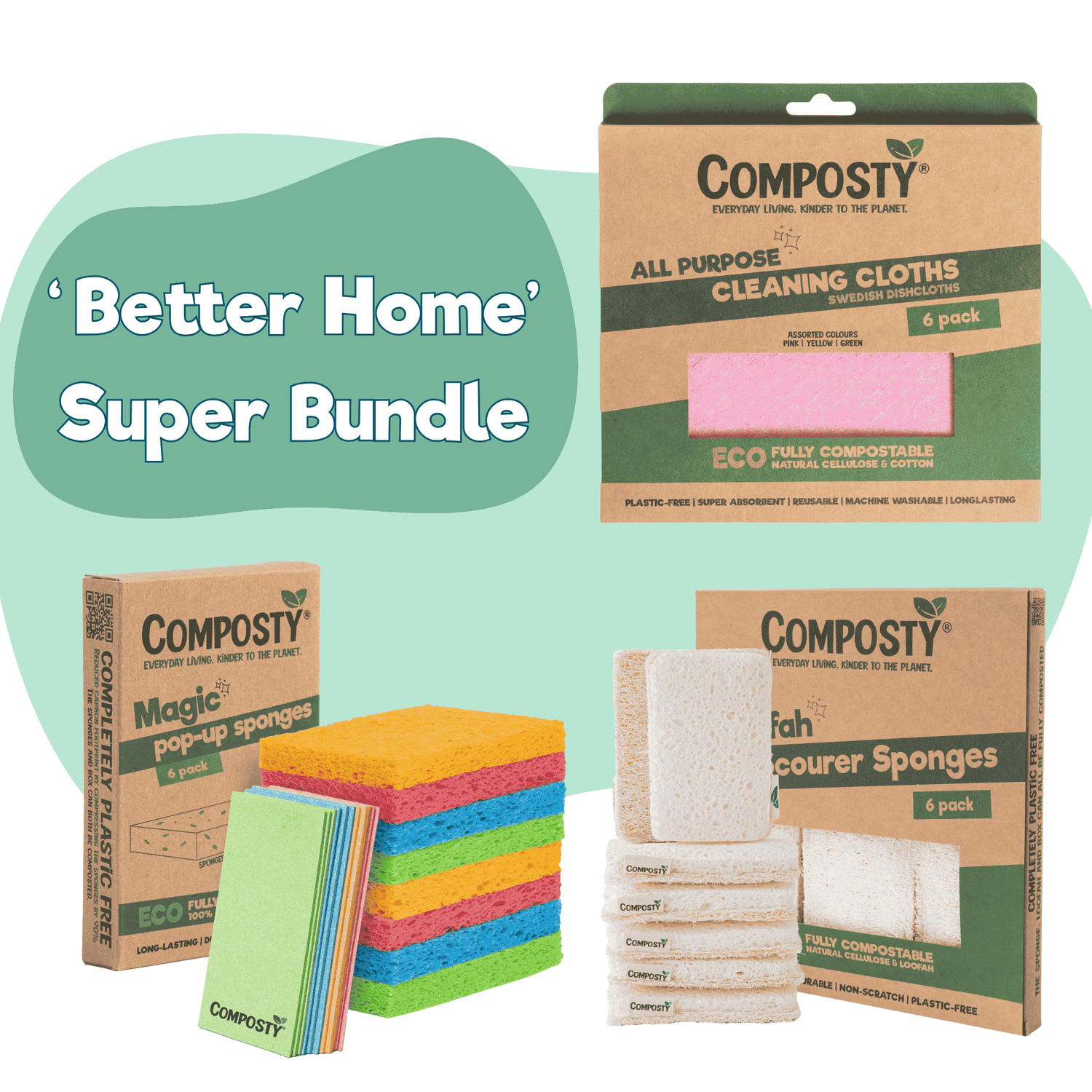
Composty’s Loofah Scourer Eco Sponges and Magic Pop-Up Eco Sponges deliver the scrub you need—no microplastics. It’s why we call them The Better Sponge.
How to switch—without compromising clean
- Pair a loofah-backed scourer for pans with a cellulose sponge for daily dishes.
- Add Swedish dishcloths for super-absorbent wipe-ups (they replace stacks of kitchen roll).
- Compost worn sponges at home. Remove food debris, cut into strips, and add to your brown bin or home compost.
FAQ
Do compostable sponges really clean as well?
Yes. The cellulose core is highly absorbent and the loofah side provides non-scratch scrub power—great on everyday grime, roasting trays and more.
Can I wash them?
Rinse after use and air-dry. Pop them in a delicates bag in the washing machine for a refresh as needed.