


7 Free Ways to Celebrate Earth Day for free!
7 Free Ways to Celebrate Earth Day When You’re Skint
Earth Day has a habit of sneaking up, doesn’t it? One minute you’re making a cup of tea, the next you’re thinking, “Oh no. Earth Day is coming up and I should probably be doing something greener.” The good news: you do not need to spend money to make a difference. In fact, some of the best Earth Day habits are completely free.
What’s in this guide
Why free Earth Day ideas matter
Earth Day can sometimes feel a bit like an accidental shopping event. Suddenly everyone is selling a new bottle, a new brush, a new storage jar, a new “must-have” eco gadget, and before you know it your attempt to live more sustainably has somehow turned into another checkout basket.
That is not the point. A better Earth Day starts with using less, wasting less, and making smarter choices with what is already in your home. It is less about buying your way into sustainability and more about noticing where money, food, energy, and effort are quietly leaking out of everyday life.
That is also why this list is so practical. Every idea below is free, realistic, and genuinely useful for busy households. No guilt. No perfection. No pretending you have hours to spare.
1. Use up what you already have before buying anything new
This is the most underrated Earth Day habit of all. Before you buy an “eco” replacement, use up what you already own properly. Finish the cleaning spray. Wear the T-shirt. Read the half-finished notebook. Use the tired candles. Eat the oats that have been in the cupboard since who knows when.
It sounds almost too simple, but it works. Buying less is usually better than buying more, even when the newer thing is marketed as sustainable. It saves money, cuts waste, and stops the cycle of “green” clutter creeping into your home.
Real-life version: the most sustainable bottle, basket, or organiser is often the one you already have.
2. Cut one bag of food waste from your week
Food waste is one of the easiest places to start because it costs you money twice: once when you buy the food, and again when it gets binned. A very quick Earth Day win is to rescue what is already in your fridge, freezer, and fruit bowl.
- Build one dinner around what needs using first.
- Freeze bread before it goes stale.
- Turn wilting veg into soup, pasta sauce, curry, or stock.
- Keep a “eat me first” box in the fridge.
- Use leftovers for lunch instead of letting them sit there looking tragic.
This is not glamorous, but it is massively effective. It is also one of those habits that feels good straight away because your fridge becomes clearer, your food bill works harder, and you are not scraping sad spinach into the bin by Friday.
3. Borrow, swap or share instead of buying
Need a tool for one job? A costume for one school event? A vase for one party? Borrow it. Ask a neighbour. Message the family group chat. Set up a quick swap with mates. Earth Day is a brilliant excuse to normalise sharing again.
We have become weirdly used to owning everything ourselves, even things we use once a year. Borrowing is free, practical, and surprisingly lovely. It saves money, avoids waste, and gives stuff a longer life.
This works especially well for kids’ gear, books, kitchen kit, garden tools, and party bits. It is also far less pressure than trying to become some flawless zero-waste goddess overnight.
4. Wash cooler, fuller and less often
You do not have to install anything fancy to make your home a bit greener. One free Earth Day move is to get a touch more intentional about how you wash clothes and dishes.
- Run full loads rather than half-empty ones.
- Skip the extra rinse unless you really need it.
- Wash cooler where your laundry allows.
- Air-dry clothes when the weather plays nice.
- Do not rewash things that are still perfectly fine.
In the kitchen, use what you already have well. A bowl of hot water can loosen dried-on mess before you start scrubbing, which means less effort and less product. For limescale, white vinegar can help on suitable surfaces, but never mix it with bleach and never use acidic cleaners on natural stone.

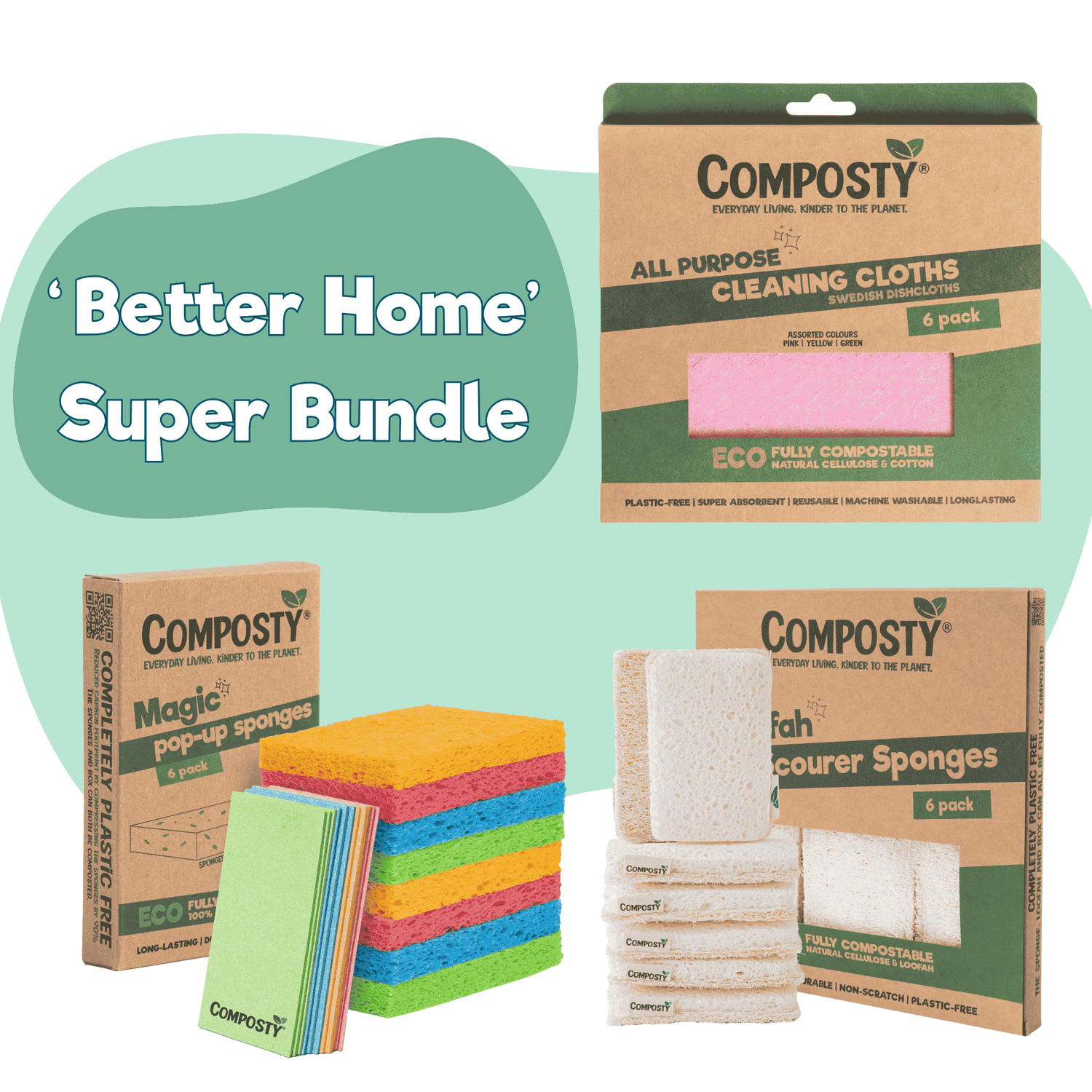
A better sponge, when you actually need one
Earth Day does not need a panic-buy. Start with the free habits first, then when your old plastic sponge is genuinely done, replace it with something better for your home and the planet.
Discover Composty5. Skip one car trip this week
You do not need to suddenly become a cyclist in head-to-toe Lycra. Just skip one car trip. Walk to school once. Combine errands. Pop to the shops on foot. Share a lift. Work from home one extra day if that is an option.
This is the kind of Earth Day goal that feels doable because it is small, specific, and not dramatic. One swapped journey will not change the world on its own, but it changes the story you are telling yourself: “I do have options. I can make better choices when they fit real life.”
6. Fix one thing you have been putting off
Sustainability is not always about recycling. Sometimes it is about finally sewing the button back on, gluing the mug handle, tightening the cupboard knob, or descaling the kettle so it actually works properly again.
Repairing what you own keeps things going for longer and stops minor annoyances turning into replacements. It is also strangely satisfying. There is something deeply powerful about spending ten minutes fixing a thing instead of chucking it in a huff.
- Stitch a small hole.
- Replace a shoelace.
- Unblock a spray nozzle.
- Descale a kettle.
- Tighten a loose screw.
- Turn odd socks into cleaning cloths.
This is also a nice one to do with children because it shows that not everything broken is rubbish.
7. Do a 20-minute litter pick near home
If you want Earth Day to feel visible, this is the one. Put on your trainers, grab gloves and a bag you already have, and spend 20 minutes picking up litter on your street, at the park, or on the school run.
It costs nothing. It makes an immediate difference. And it gets you out of the house feeling like you have actually done something rather than just thought about doing something.
Keep it simple:
- Choose a small area.
- Set a timer for 20 minutes.
- Bring gloves and a sturdy bag.
- Stick to safe, visible rubbish only.
- Wash hands well afterwards.
What to do after Earth Day
The best Earth Day ideas are the ones that quietly stick. So instead of trying all seven at once and feeling saintly for six minutes, choose two that actually suit your life.
A good pairing could be:
- one home habit such as using up food or washing fuller loads
- one community habit such as borrowing, swapping, or doing a quick litter pick
That is enough. Truly. Sustainability works better when it feels normal, not punishing.
And when something in your kitchen really does need replacing, make it a better replacement. Our guide to spring cleaning the sustainable way is a good next step if you are in that mood to sort the house out properly.
One last thing: do not let Earth Day become another expensive to-do list
You do not need to buy a whole new personality in beige jars to care about the planet. You do not need to become perfect by Tuesday. You just need to waste a bit less, use what you have a bit better, and make one or two better choices that suit your home.
That is still Earth Day. That still counts. And honestly? It is often the version that lasts.
Earth Day budget FAQs
What can I do for Earth Day without spending money?
Start with what is already in your routine: use up food before it goes off, borrow instead of buying, mend one thing, wash more efficiently, walk one short journey, and do a quick litter pick near home.
How can I be more sustainable when I am on a budget?
The cheapest sustainable habits are usually the ones that reduce waste. Buying less, wasting less food, using less energy, and repairing what you own all help the planet and your bank balance at the same time.
Do I need to buy eco products to celebrate Earth Day?
No. Earth Day is not about panic-buying “green” stuff. Free habits come first. Then, when something genuinely needs replacing, choose the better option for your home, your wallet, and the planet.
External resources referenced in this article: EARTHDAY.ORG, US EPA, WRAP, and Energy Saving Trust.