
How to Clean Eco Sponges (and Dishcloths) the Right Way
How to Clean Eco Sponges (and Dishcloths) the Right Way
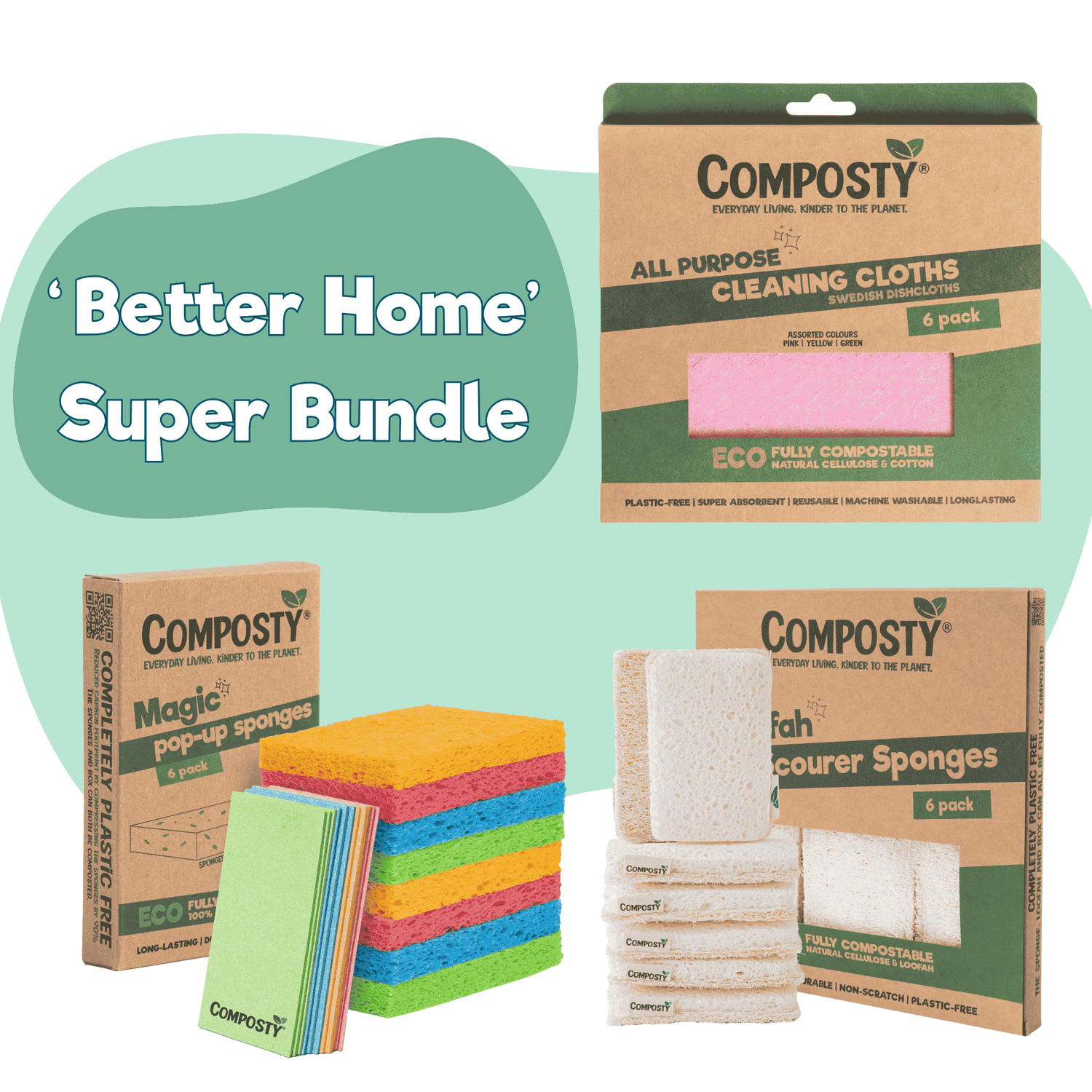
Good news: looking after cellulose sponges and Swedish dishcloths is quick and low-effort. A little care goes a long way to keeping them fresher between washes—and extending the life of The Better Sponge.
Everyday refresh
- Rinse & squeeze: After each use, rinse thoroughly and squeeze out as much water as you can.
- Air-dry fast: Stand sponges upright in a ventilated caddy; hang cloths so air can circulate.
- Colour-code: Keep separate tools for dishes vs surfaces to avoid cross-contamination.
Weekly deep clean (no bleach needed)
- Machine wash: Pop items into a delicates bag; wash warm with regular laundry. Skip fabric softener (it reduces absorbency).
- Boil wash: Simmer in hot water for 3–5 minutes; let cool, squeeze and air-dry.
- Bicarb refresh: Soak in warm water with a spoon of bicarbonate of soda for 15 minutes, then rinse.
When to replace
Swap out when a sponge thins, tears, or smells after a hot wash. Cut into strips and add to your home compost; open a fresh one and you’re set.
FAQ
Can I microwave my sponge to disinfect it?
We don’t recommend it—microwaves can be inconsistent and may damage fibres. A quick boil-wash or a warm machine cycle is safer and effective.
Is vinegar safe on cellulose & Swedish cloths?
Yes, in moderation. A 1:4 vinegar-to-water soak can help deodorise. Rinse thoroughly to remove residual acidity.
How do I prevent the “old sponge smell”?
Drying speed is everything. Use a ventilated caddy, squeeze hard after use, and give a weekly heat clean (boil or machine) to reset.