


How to Compost Cellulose & Loofah Sponges at Home (Step-By-Step)
How to Compost Cellulose & Loofah Sponges at Home (Step-By-Step)
Plant-based sponges don’t belong in landfill. If you’ve switched to cellulose and loofah, here’s how to return them to the earth when they’re done scrubbing—quickly, cleanly, and without fuss.
Before you start: confirm materials
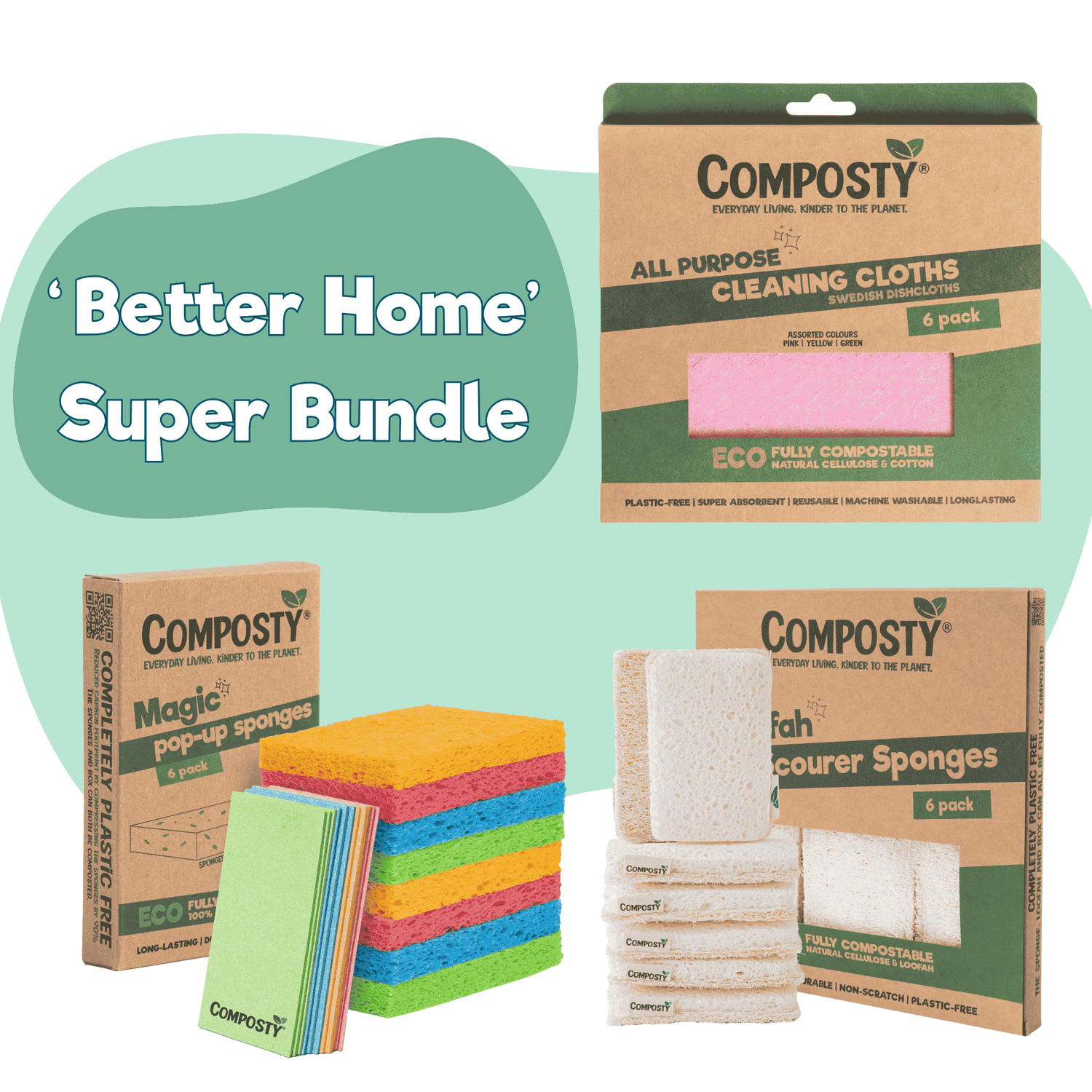
Look for plastic-free construction (cellulose/loofah/cotton stitching). Composty sponges are designed to be home-compostable at end of life. If a product lists polyurethane or polyester, it belongs in general waste, not your compost.
Prep in 3 simple steps
- Rinse & squeeze: Remove grease and food bits.
- Cut down: Snip into 2–3 cm strips for faster breakdown and airflow.
- Layer right: Mix with browns (cardboard, leaves) and greens (veg scraps) to keep compost aerated.
Do’s & don’ts
- Do rotate your pile and keep it moist like a wrung-out sponge.
- Do cut away any non-plant bits (labels, if synthetic).
- Don’t compost anything with plastic nets or synthetic fibres.
FAQ
How long do cellulose & loofah sponges take to break down?
In a healthy home compost that’s turned and kept moist, thinly cut pieces typically break down over a few months. Warmer, well-aerated heaps go faster.
Can I compost a sponge that smells or looks stained?
Yes, but rinse first and cut into smaller pieces. Heavy grease slows decomposition—wash with hot water first to help your heap stay balanced.
What shouldn’t go into my compost?
Anything with plastic mesh, synthetic thread, or polyurethane/polyester. Those belong in general waste.