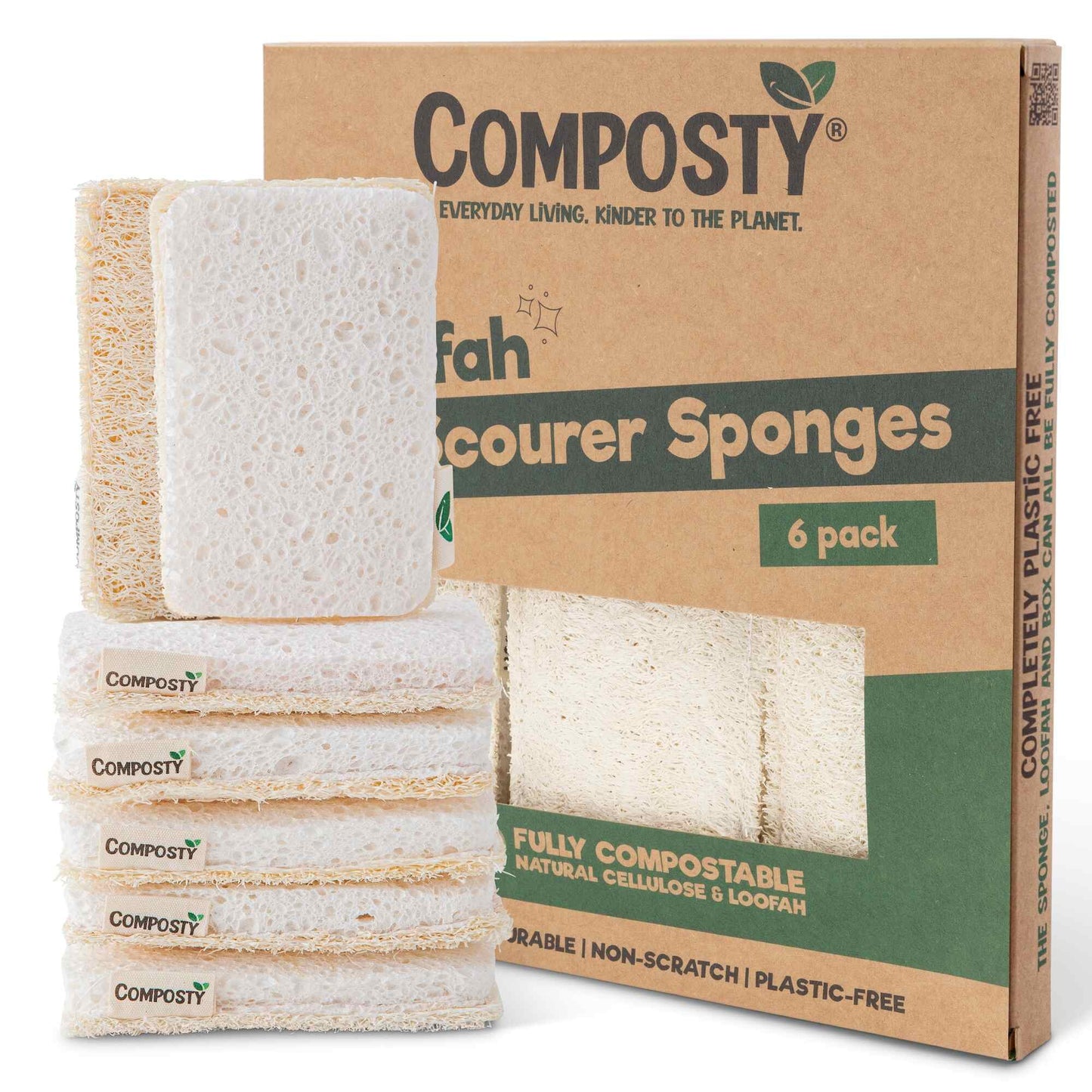
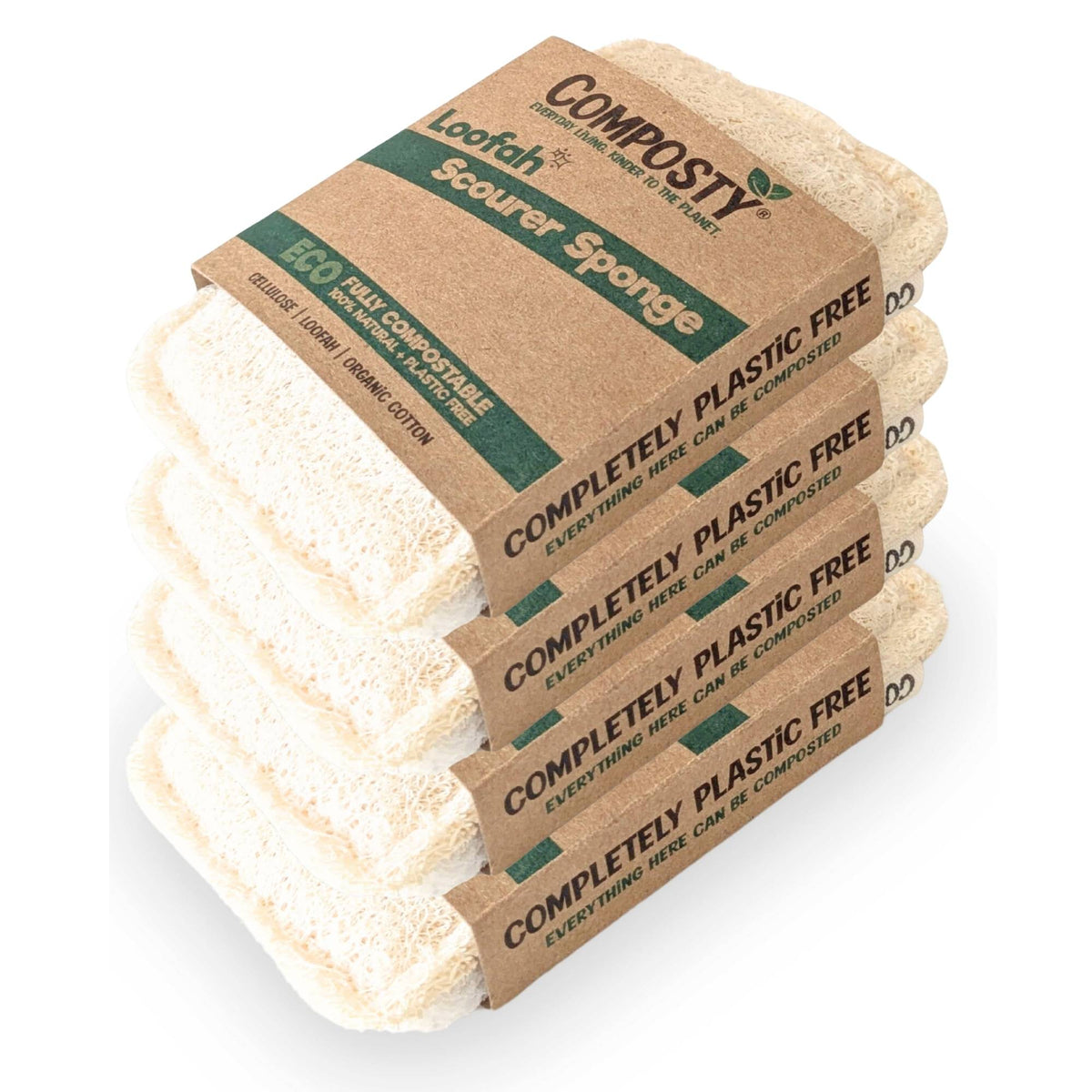
Two sides for everyday washing up: an absorbent cellulose sponge for dishes and a textured loofah layer for food residue. They’re joined with cotton stitching, with no plastic scourer pad or glue.
Choose the sponge side for everyday wiping and the loofah side when you need more texture. For delicate finishes, check the cookware maker’s instructions and test gently on a small area first.
Why You’ll Love It
Two useful textures in one sponge: absorbent cellulose and a loofah scourer.
Cotton stitching joins the layers without glue.
Washable, so you can refresh it using the pack’s care instructions.
Home-compostable when worn out, following our composting guide.
Materials & Sustainability
Cellulose made from wood pulp, a loofah scourer layer and cotton stitching.
Plastic-free sponge construction, joined without glue.
Home-compostable at the end of its useful life. Cut into small pieces and follow our composting guide; breakdown time varies with conditions.
Designed in the UK and made in China.
Care, Hygiene & After Use
Rinse before first use. After washing up, rinse thoroughly, squeeze out excess water and air-dry. Keep separate cleaning tools for dishes, household surfaces and raw-food spills.
Machine washable up to 40°C and suitable for the dishwasher’s top rack, following the pack instructions. Washing to refresh a sponge is not a guarantee of disinfection.
Replace when worn, damaged, persistently smelly or no longer cleaning well. How long a sponge lasts depends on use and care; a tidy appearance alone does not establish hygiene.
For home composting, rinse away food residue and cut into small pieces. Do not compost a sponge used with paint, solvents or other substances unsuitable for your compost.